
Technical Articles
NANBEI Is Professional On Providing One-step Solution Of Laboratory Instruments And Equipment
A rotary evaporator is an essential laboratory instrument widely used for solvent evaporation, concentration, and purification. The heating system, usually a water or oil bath, plays a critical role in ensuring efficient and consistent evaporation. Improving heating efficiency not only saves time and energy but also enhances the overall performance of the equipment.
Water or Oil Bath Temperature Settings
Setting the bath temperature too low can slow down evaporation, while excessive heating may cause solvent loss or sample degradation.
Insufficient Heat Transfer
Poor thermal conductivity between the heating bath and evaporation flask reduces energy efficiency.
Inadequate Vacuum System
If the vacuum level is not optimal, boiling points rise, requiring more heat for solvent evaporation.
Improper Flask Rotation Speed
Slow or uneven rotation reduces the surface area of liquid exposed to heat, leading to inefficient heating.
Scaling or Contamination in Heating Bath
Deposits inside the water or oil bath reduce heat transfer efficiency and lead to energy loss.
Optimize Temperature Settings
Adjust the bath temperature according to the solvent’s boiling point under vacuum. For example, water typically evaporates efficiently at 40–60°C under reduced pressure.
Use Suitable Heat Transfer Media
Choose water for solvents with lower boiling points and switch to oil when higher temperatures are required.
Maintain a Stable Vacuum Level
Ensure that the vacuum pump and sealing components are in good condition. A stable vacuum lowers boiling points and reduces heating demand.
Increase Flask Rotation Speed
Faster rotation enlarges the liquid film area, accelerating evaporation and improving heat absorption.
Keep the Bath Clean
Regularly clean the heating bath to remove scale, dirt, or residual chemicals that hinder heat transfer.
Use High-Quality Rotary Evaporators
Selecting advanced rotary evaporators with efficient heating systems, precise temperature control, and good sealing can greatly improve evaporation efficiency.
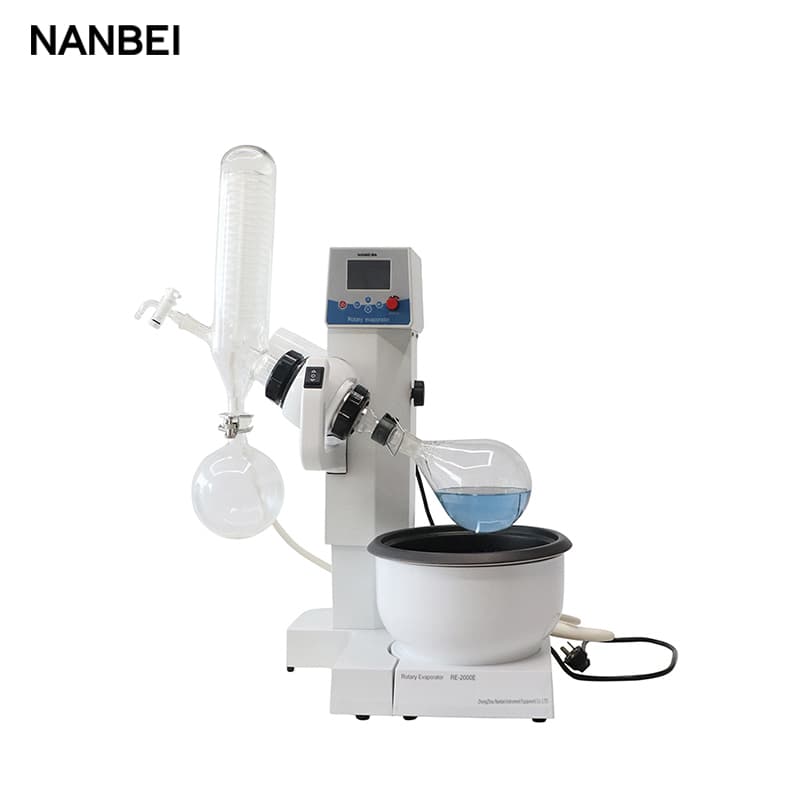
our Rotary Evaporator product details
Improving the heating efficiency of a rotary evaporator requires a combination of proper operation, maintenance, and equipment selection. By optimizing parameters such as temperature, vacuum, and rotation speed, laboratories can achieve faster, safer, and more energy-efficient solvent evaporation.