
Technical Articles
NANBEI Is Professional On Providing One-step Solution Of Laboratory Instruments And Equipment
A laboratory glass reactor is a piece of equipment widely used in chemical, pharmaceutical, food, and materials research fields. It provides a controlled environment for mixing, reaction, distillation, crystallization, and extraction processes.
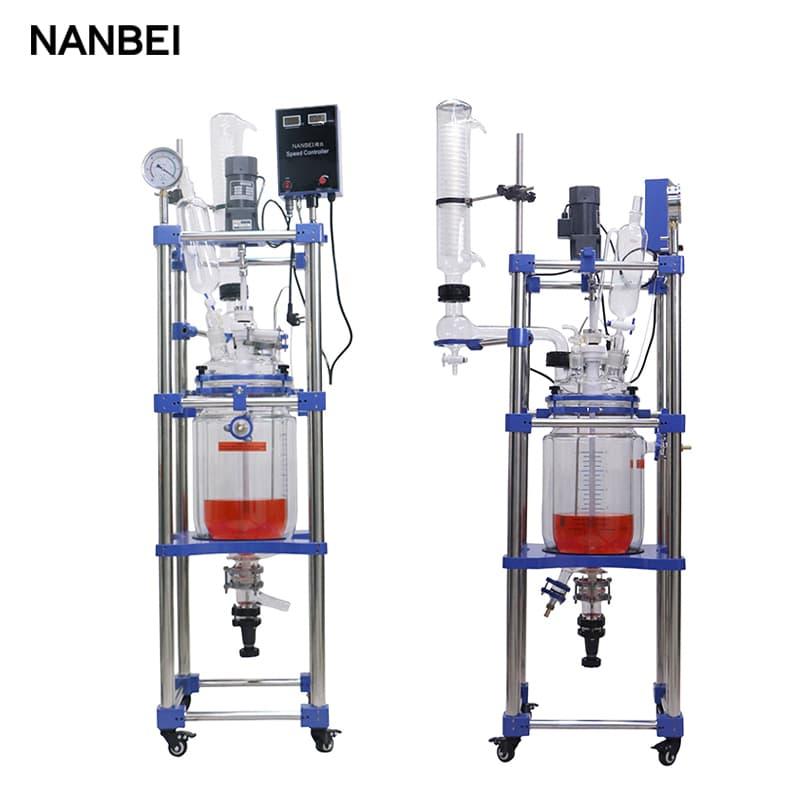
A typical glass reactor consists of:
Reaction Vessel – Made of high borosilicate glass, resistant to high temperature, corrosion, and chemical erosion.
Jacket Layer – A double-wall structure where heating or cooling media (such as water, oil, or glycol) circulate to control the reaction temperature.
Agitator – Driven by a motor to stir materials uniformly and promote reaction efficiency.
Sealing System – Prevents air leakage and ensures a stable vacuum environment when needed.
Supporting Frame & Control System – Provides mechanical stability and allows precise control of parameters like speed, temperature, and pressure.
The double-layer design is the core of a glass reactor’s operation:
Hot water, steam, or oil circulates through the jacket to heat the materials.
Cooling water or antifreeze can be used to lower the reaction temperature.
The built-in stirring mechanism ensures even mixing, avoiding local overheating or precipitation.
When combined with a vacuum pump, the reactor can operate under reduced pressure, which lowers boiling points and improves reaction safety and efficiency.
Pharmaceuticals – drug synthesis, intermediate preparation.
Chemistry – catalytic reactions, polymerization, extraction.
Food & Agriculture – additive development, natural product extraction.
Material Science – nanomaterials, coatings, resins.
Transparent design for easy observation.
Strong corrosion resistance and durability.
Flexible operation with precise temperature and pressure control.
Easy cleaning and maintenance.
Click here to view our laboratory glass reactor product details